

In nature, some of the most remarkable systems operate without a central leader — schools of fish move in harmony, ants coordinate to build colonies, and flocks of birds form mesmerising aerial patterns. These systems, despite their complexity, thrive on simple rules and local interactions. This phenomenon, known as swarm intelligence, has become a guiding principle in artificial intelligence, robotics, and optimisation problems.
Swarm intelligence teaches us that collective behaviour can emerge from individual actions guided by local awareness rather than top-down control. In the world of AI, it’s a reminder that brilliance often comes from collaboration rather than command.
The Natural Blueprint: Learning from Ants, Bees, and Birds
Nature has long served as a silent instructor for computational models. Ant colonies, for instance, solve complex optimisation problems daily — finding the shortest path to food sources without ever having a master plan. Each ant follows pheromone trails, strengthening the most efficient routes through repetition.
Similarly, flocks of birds coordinate seamlessly during migration, reacting to neighbours within their visual range. These natural systems embody decentralised intelligence, where each agent contributes to a larger purpose through simple rules.
In AI, this concept translates into algorithms like Ant Colony Optimisation (ACO) and Particle Swarm Optimisation (PSO). These models mimic nature’s mechanisms to solve computational problems — from logistics planning to neural network tuning — by relying on distributed collaboration rather than a single controlling entity.
For those beginning their journey into these intelligent models, structured learning through an ai course in Mumbai can be immensely helpful in understanding how swarm-based frameworks form the backbone of modern decentralised AI systems.
Algorithms that Mirror Nature
Swarm intelligence algorithms operate on three fundamental principles — decentralisation, self-organisation, and adaptability. Each agent in the system makes decisions based on its local environment rather than a central command, resulting in emergent global behaviour.
Ant Colony Optimisation, for example, relies on agents laying and following virtual pheromone trails, allowing the system to iteratively improve solutions. Particle Swarm Optimisation, on the other hand, models a population of particles adjusting their trajectories based on their own best experiences and that of their peers — a digital reflection of how birds flock.
These algorithms excel in real-world applications such as route optimisation, robotics coordination, and machine learning parameter tuning. What makes them powerful is their scalability — adding more agents improves efficiency rather than complicating control.
Decentralised Control in Action
In large-scale systems, centralised control often leads to bottlenecks and single points of failure. Decentralised models, inspired by swarm intelligence, distribute decision-making across multiple agents, ensuring resilience and scalability.
Consider drone swarms used in disaster management. Instead of relying on one central controller, each drone communicates with its neighbours, collectively mapping terrains or locating survivors. Similarly, autonomous vehicles use decentralised communication to coordinate traffic movement safely and efficiently.
This decentralised architecture ensures adaptability — if one unit fails, the rest continue seamlessly. Such resilience mirrors how an ant colony continues functioning even if several ants are lost, proving that the power of collective intelligence lies in independence and interdependence coexisting harmoniously.
From Research to Real-World Innovation
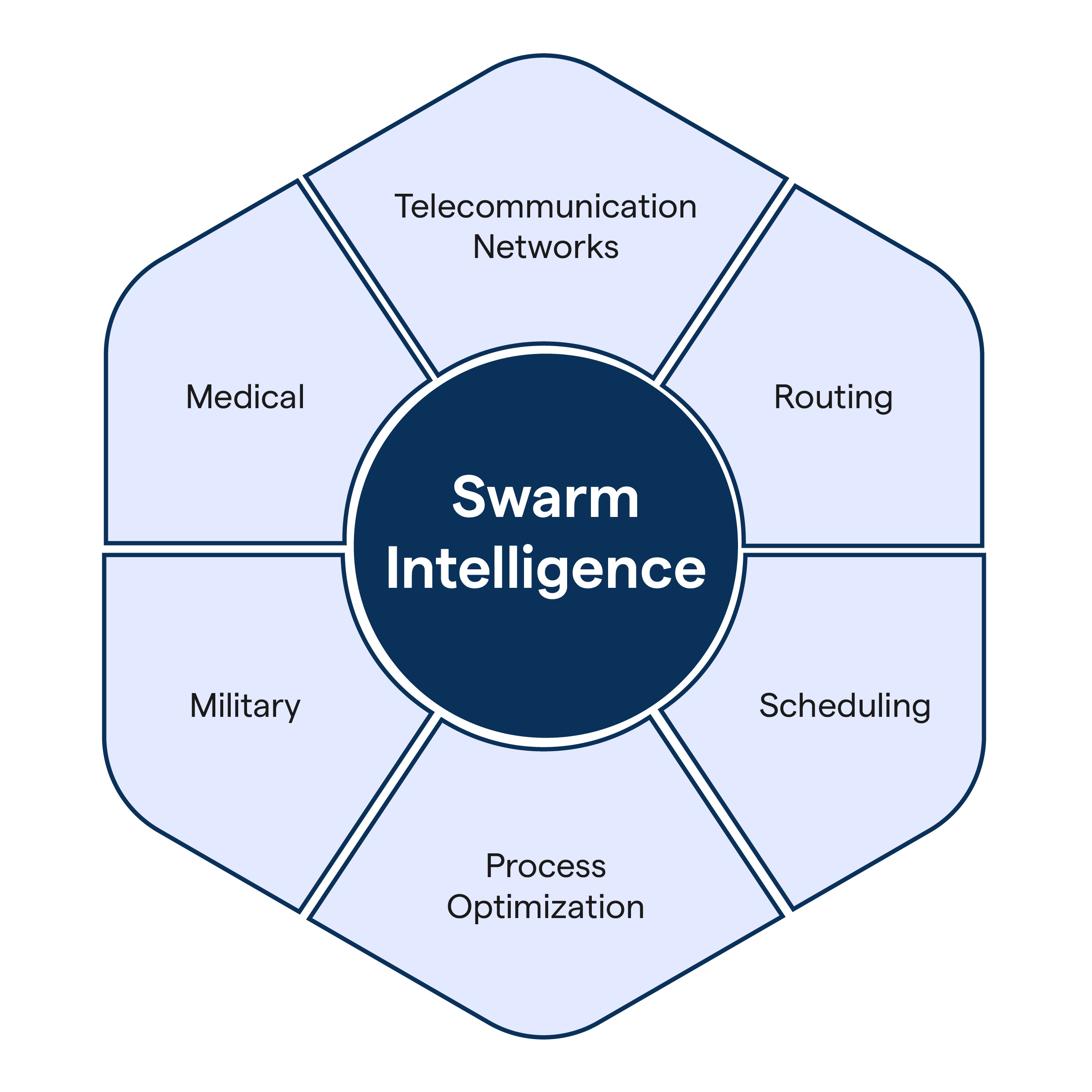
Swarm intelligence isn’t confined to research papers; it’s already influencing industries. Telecommunications companies use swarm-based algorithms for network routing. Logistics firms deploy them for dynamic pathfinding. Even finance relies on these principles to simulate market dynamics where agents represent traders with varying goals and information access.
Educational programs, such as an ai course in Mumbai, help learners bridge the gap between theory and application by demonstrating how swarm models shape real-world AI systems — from predictive modelling to distributed robotics. By mastering these techniques, professionals can design systems that think collectively and respond intelligently.
Conclusion: The Power of the Collective Mind
Swarm intelligence proves that order can emerge from apparent chaos. Whether it’s ants building intricate colonies or algorithms optimising global logistics, the underlying principle remains — local decisions can lead to global intelligence.
In a world increasingly defined by interconnected systems, decentralised AI models hold the key to scalable and resilient automation. They teach us that intelligence doesn’t always come from a central brain; sometimes, it blossoms from collaboration and communication among many simple parts.
As technology continues to evolve, those who understand the art of decentralised systems will shape the future — one swarm at a time.
Swarm Intelligence: Decentralised Control Models for Coordinating Large-Scale Agent Systems
In nature, some of the most remarkable systems operate without a central leader — schools of fish move in harmony, ants coordinate to build colonies, and flocks of birds form mesmerising aerial patterns. These systems, despite their complexity, thrive on simple rules and local interactions. This phenomenon, known as swarm intelligence, has become a guiding principle in artificial intelligence, robotics, and optimisation problems.
Swarm intelligence teaches us that collective behaviour can emerge from individual actions guided by local awareness rather than top-down control. In the world of AI, it’s a reminder that brilliance often comes from collaboration rather than command.
The Natural Blueprint: Learning from Ants, Bees, and Birds
Nature has long served as a silent instructor for computational models. Ant colonies, for instance, solve complex optimisation problems daily — finding the shortest path to food sources without ever having a master plan. Each ant follows pheromone trails, strengthening the most efficient routes through repetition.
Similarly, flocks of birds coordinate seamlessly during migration, reacting to neighbours within their visual range. These natural systems embody decentralised intelligence, where each agent contributes to a larger purpose through simple rules.
In AI, this concept translates into algorithms like Ant Colony Optimisation (ACO) and Particle Swarm Optimisation (PSO). These models mimic nature’s mechanisms to solve computational problems — from logistics planning to neural network tuning — by relying on distributed collaboration rather than a single controlling entity.
For those beginning their journey into these intelligent models, structured learning through an ai course in Mumbai can be immensely helpful in understanding how swarm-based frameworks form the backbone of modern decentralised AI systems.
Algorithms that Mirror Nature
Swarm intelligence algorithms operate on three fundamental principles — decentralisation, self-organisation, and adaptability. Each agent in the system makes decisions based on its local environment rather than a central command, resulting in emergent global behaviour.
Ant Colony Optimisation, for example, relies on agents laying and following virtual pheromone trails, allowing the system to iteratively improve solutions. Particle Swarm Optimisation, on the other hand, models a population of particles adjusting their trajectories based on their own best experiences and that of their peers — a digital reflection of how birds flock.
These algorithms excel in real-world applications such as route optimisation, robotics coordination, and machine learning parameter tuning. What makes them powerful is their scalability — adding more agents improves efficiency rather than complicating control.
Decentralised Control in Action
In large-scale systems, centralised control often leads to bottlenecks and single points of failure. Decentralised models, inspired by swarm intelligence, distribute decision-making across multiple agents, ensuring resilience and scalability.
Consider drone swarms used in disaster management. Instead of relying on one central controller, each drone communicates with its neighbours, collectively mapping terrains or locating survivors. Similarly, autonomous vehicles use decentralised communication to coordinate traffic movement safely and efficiently.
This decentralised architecture ensures adaptability — if one unit fails, the rest continue seamlessly. Such resilience mirrors how an ant colony continues functioning even if several ants are lost, proving that the power of collective intelligence lies in independence and interdependence coexisting harmoniously.
From Research to Real-World Innovation
Swarm intelligence isn’t confined to research papers; it’s already influencing industries. Telecommunications companies use swarm-based algorithms for network routing. Logistics firms deploy them for dynamic pathfinding. Even finance relies on these principles to simulate market dynamics where agents represent traders with varying goals and information access.
Educational programs, such as an ai course in Mumbai, help learners bridge the gap between theory and application by demonstrating how swarm models shape real-world AI systems — from predictive modelling to distributed robotics. By mastering these techniques, professionals can design systems that think collectively and respond intelligently.
Conclusion: The Power of the Collective Mind
Swarm intelligence proves that order can emerge from apparent chaos. Whether it’s ants building intricate colonies or algorithms optimising global logistics, the underlying principle remains — local decisions can lead to global intelligence.
In a world increasingly defined by interconnected systems, decentralised AI models hold the key to scalable and resilient automation. They teach us that intelligence doesn’t always come from a central brain; sometimes, it blossoms from collaboration and communication among many simple parts.
As technology continues to evolve, those who understand the art of decentralised systems will shape the future — one swarm at a time.